
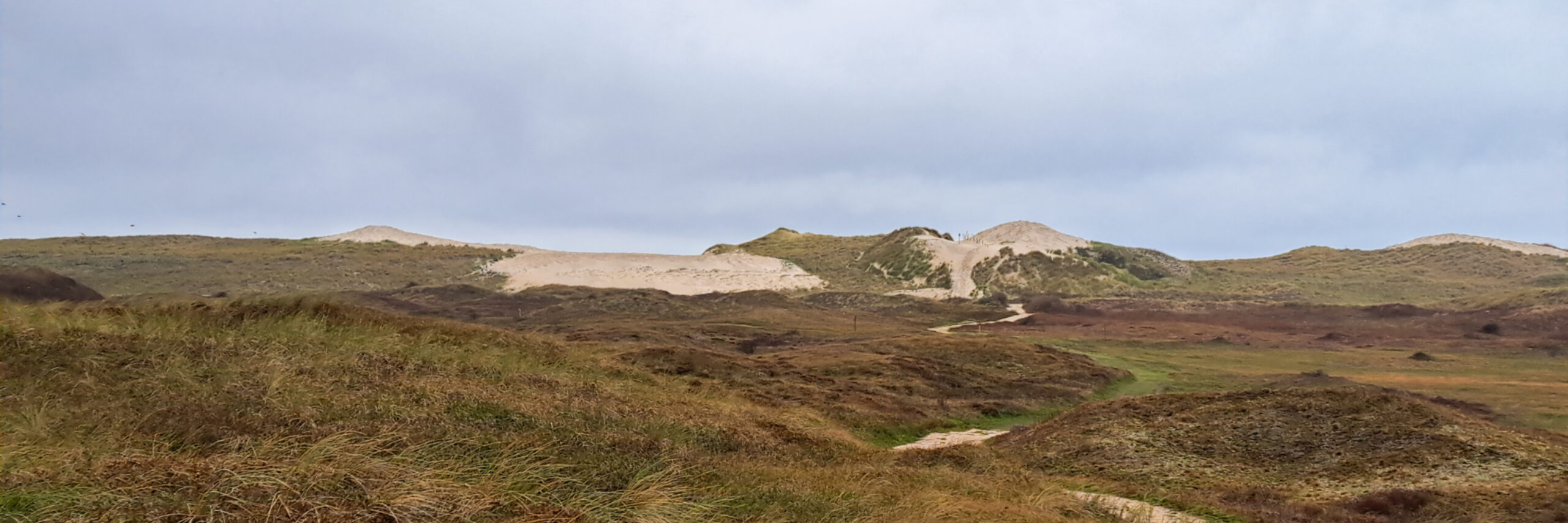
In February, Staatsbosbeheer (the Dutch Forestry Commission) will commence various activities on the island. These activities will result in new sand drifts and the preservation of the rabbit and rock pipit populations at pole 28, as well as greater biodiversity in the Westerduinen.
Five new sand drifts
From 9 February, four sand drifts will be created in the sea ridge north of pole 28. There will be five drifts in total, with the last one being created next winter. The sand released during the construction of this fifth drift will be used to raise the level of the car park at pole 28. The drifts are located on the sea side of the sea ridge. They are therefore not notches like the notch at pole 14, where the dune has been topped.
Rabbits and wheatears
Forester Thomas van der Es explains: 'We now have a sizeable population of rabbits in the landscape, and the area is an important breeding site for wheatears. In order to preserve the open dune landscape as well as the rabbit and wheatear populations, it is necessary to initiate the sand drifts. The drifts bring more calcareous sand into the area. This calcareous sand prevents the landscape from becoming overgrown. Both the rabbit and the wheatear depend on the low vegetation full of herbs and lichens." The presence of the wheatear in this area will be taken into account during the work, with breeding sites being avoided.
Open dune valley
In the dune landscape behind, old drift pits are being dug up to restart the dynamic process. The wet dune valley adjacent to the car park at pole 28 will be mowed to remove the tall vegetation of dune grass and creeping willow and give the valley the opportunity to develop into an open, moist dune valley again.
Nature restoration in the Westerduinen
On 16 February, Staatsbosbeheer will start nature restoration work in the Westerduinen. The work follows the construction of the notch at pole 14 last year. Mowing will be carried out to make way for low vegetation full of herbs, heather and lichens, replacing dominant species such as blackberries, dune grass and tall dune roses.
Northern vole
Prior to the work, research was conducted into the population of northern voles in this area. The presence of this protected species will be taken into account during the work.
Drift pits behind the notch
The drift pits created in the area behind the notch will also be dug through in February. The notch allows more sand from the sea ridge to drift into the area behind it. The drifting sand allows biodiversity to increase again and allows the dunes to grow inland.
More actuality
Sign In
Do you want personal tips for your holiday? Then sign up for the newsletter