
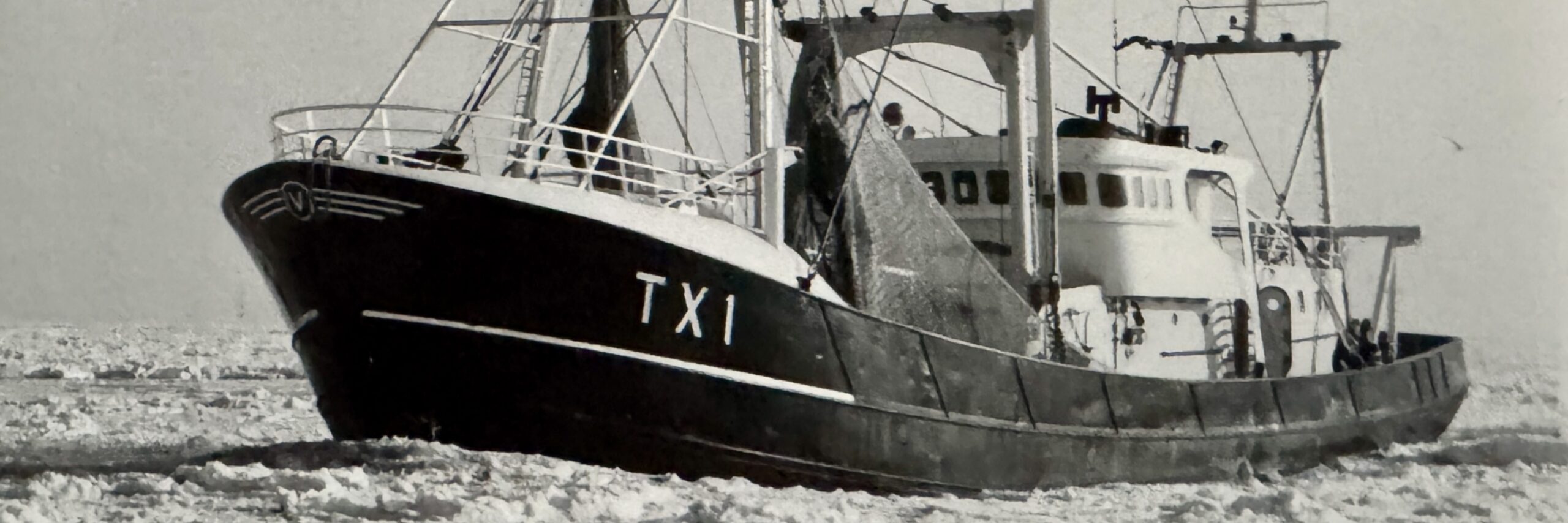
History of Texel fishing
Fishing lives on in Oudeschild. Street names, family stories and the new monument on the dike make the past tangible. The monument is a continuation of the bench at the harbour mouth (behind the TX 29), a silent reminder of the recent redevelopment. Next to it, you will now find a piece of the railing from the TX 3 and, on the other side, a replica of a sword, modelled on the original at Museum Kaap Skil. The texts you can read on the panels are reproduced below. Would you like to know more about fishing on Texel after reading this? Then visit the exhibition Texelse visserij in beeld (Texel fishing in pictures) at Kaap Skil.
From botter to cutter
Texel has lived with the sea for centuries. Fishermen braved the waves in search of fish and a better life. Until 1922, they sailed in wooden botters and blazers, propelled by the wind. Later, powerful engines and steel hulls came into use. This took the Texel fleet to distant fishing grounds in the North Sea, with large catches in their nets.
Sometimes the sea brought prosperity, sometimes misfortune. From war to expensive fuel and European regulations, each generation had to adapt to harsh realities. Yet Texel's fishermen remained innovative and seized the opportunities that came their way. Today, Texel has only a handful of cutters left. Nevertheless, history lives on in family stories, ship names and the harbour itself.
Tribute to Texel fishermen
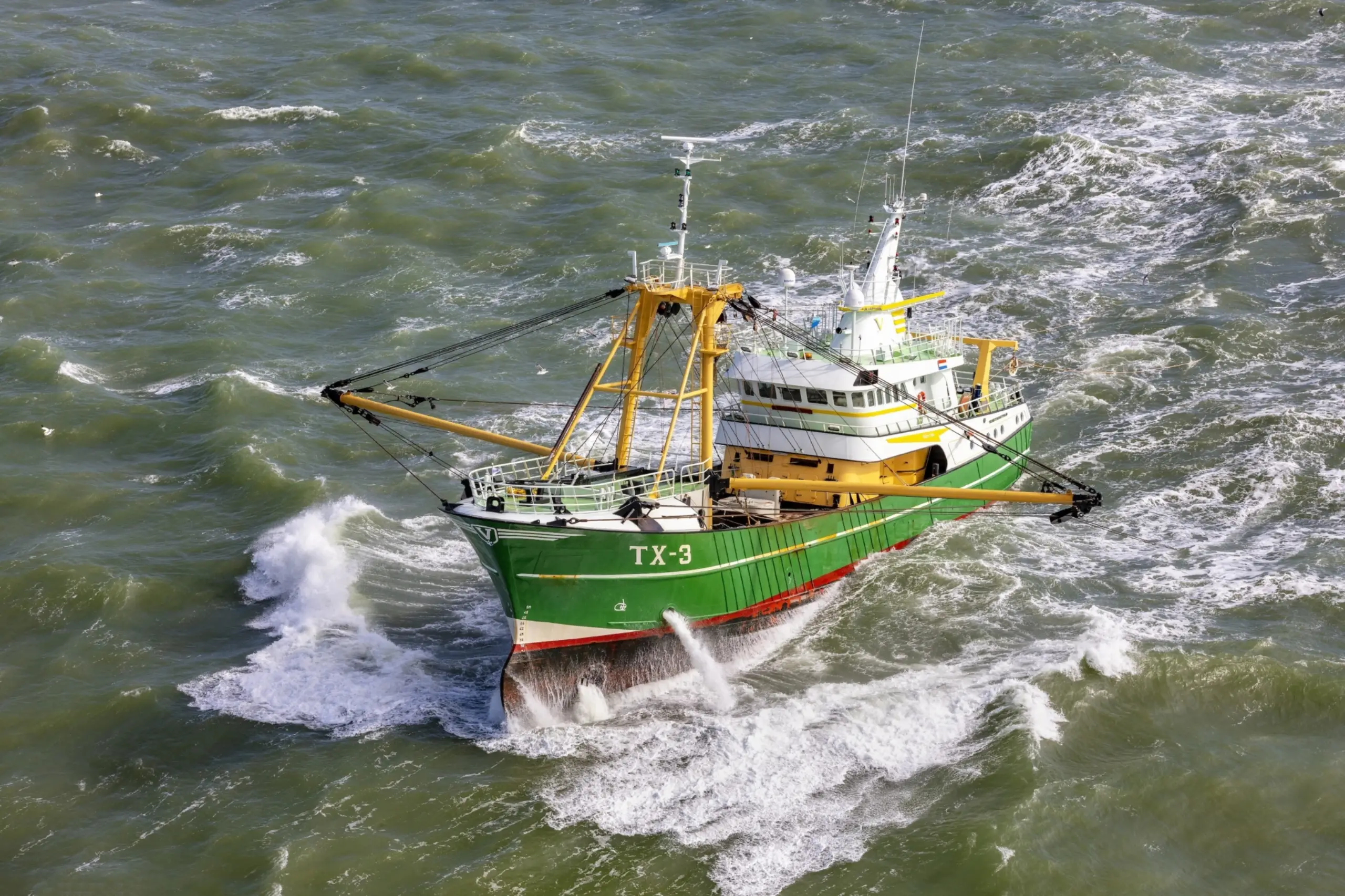
This monument is an ode to Texel fishing. The sword is a replica of the historic TX 11 blazer from 1894, owned by the Vlaming brothers. The railing comes from the cutter TX 3 Biem-Jan. This ship was in service from 2005 to 2022, with the Van der Vis brothers at the helm. In addition to sole and plaice, they often had unusual by-catches in their nets, such as a bust of Lenin.
In 2022, the brothers decided to stop fishing. It was a painful decision, as the Van der Vis family has been sailing the seas since 1875. The uncertain future and lack of succession were too great an obstacle. The TX 3 was decommissioned, which meant it was scrapped. The railing was preserved and is a tangible reminder of a glorious fishing past.
From sail to motor (1890-1945)
'It is 1890. In the harbour of Oudeschild, more than a hundred sails sway in the wind.'
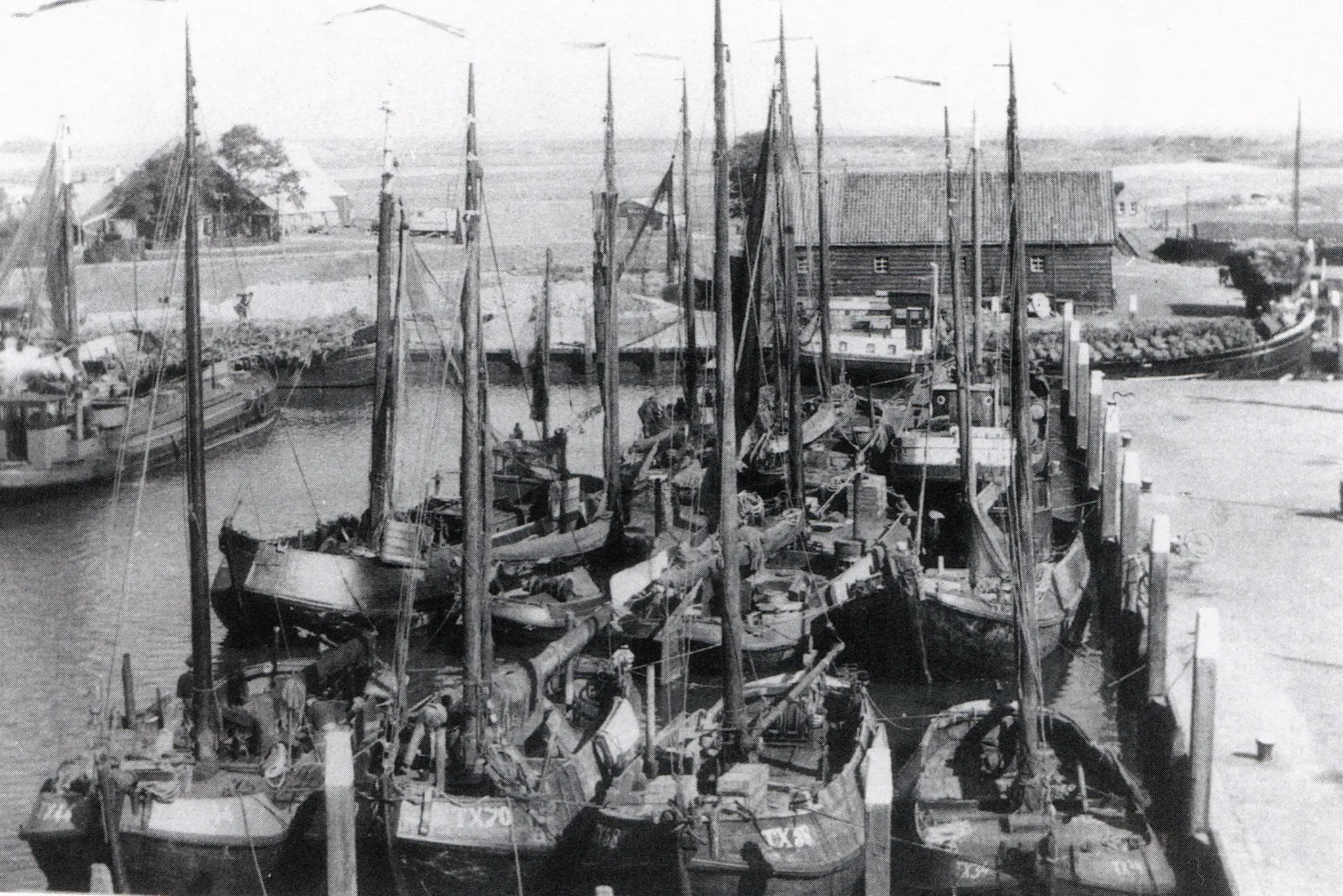
Around 1900, the harbour of Oudeschild is bustling with activity. Nearly 135 blazers and 4 botters set sail. Wooden flat-bottomed boats with convex sails take to the open sea: the Zuiderzee and the Wadden Sea. Around 1915, that number had dwindled to 25 ships, but the fishermen persevered. The arrival of the Afsluitdijk in 1932 changed everything. The Zuiderzee became the IJsselmeer and familiar fishing grounds disappeared. From then on, the Texel fishermen focused on the North Sea, which required stronger ships. In 1922, a cautious switch to iron and steel was made.
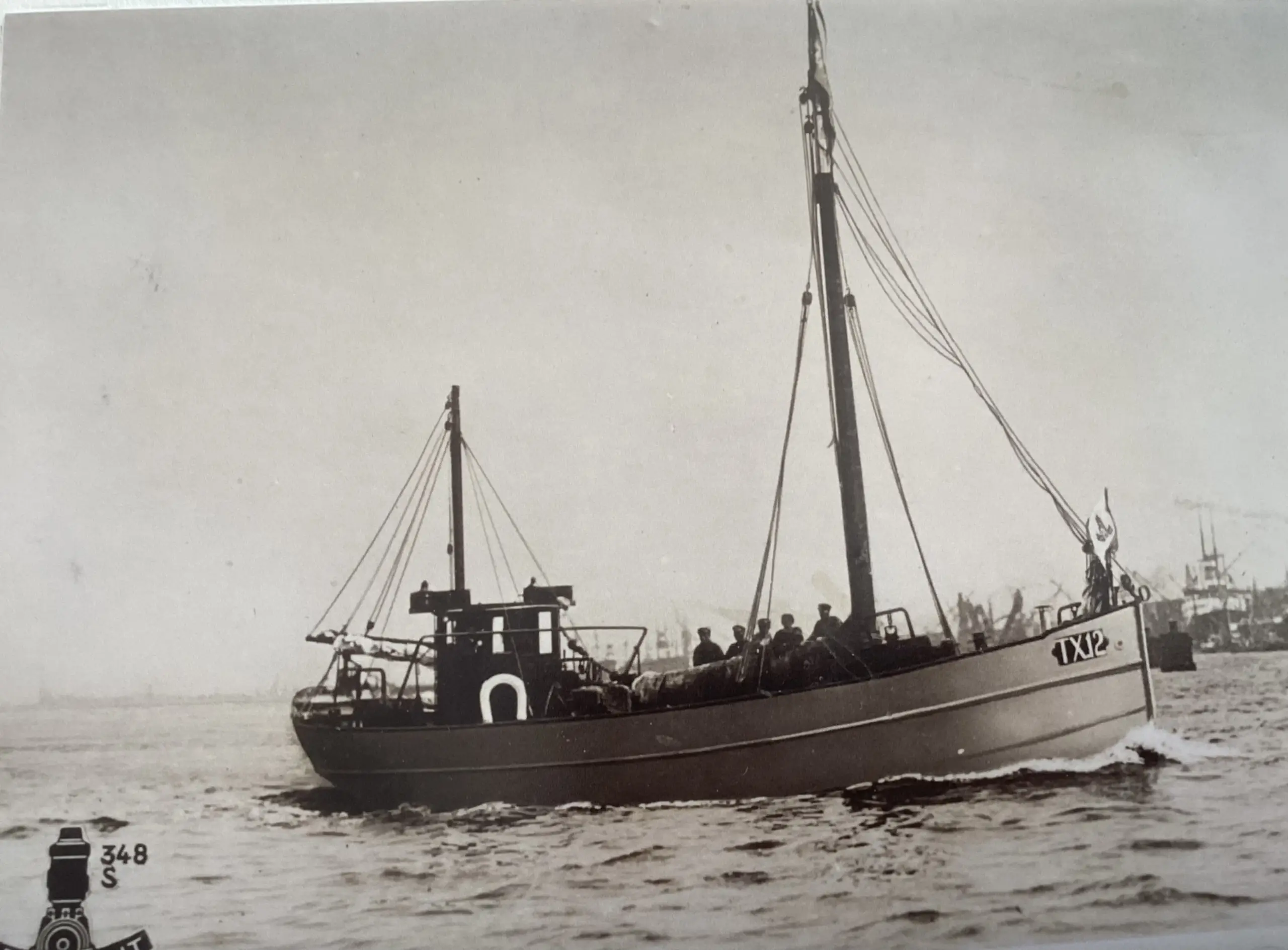
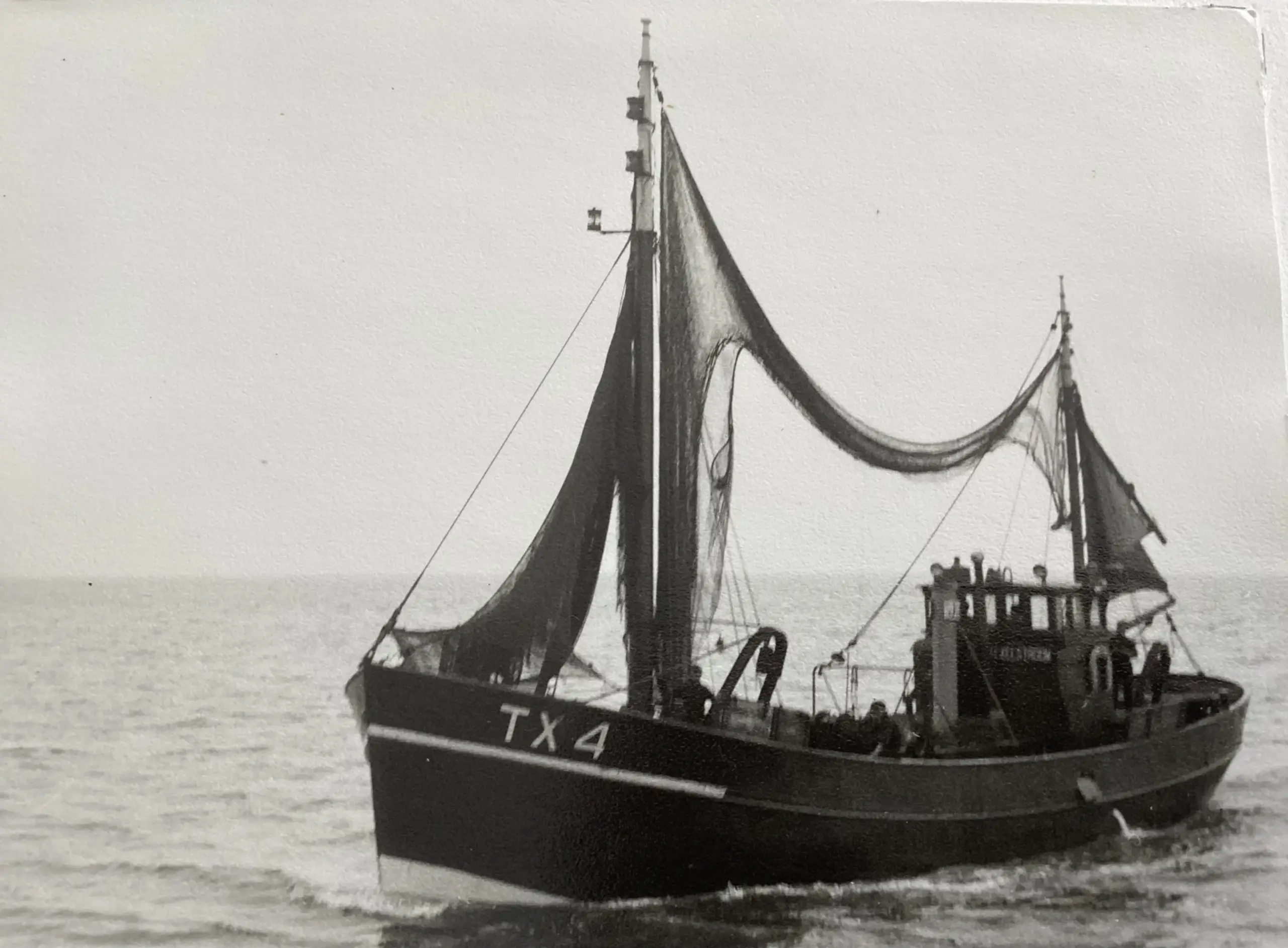
In 1927, 19-year-old Pieter Drijver built the first Texel cutter. The TX 12 was named “Op Hoop van Zegen” (On Hope of Blessing). This steel boat had a powerful 80 hp engine. A turning point! In the mid-1930s, the Texel fleet continued to grow. Despite the threat of the Second World War, the islanders regularly launched new cutters. These were large ships, such as the TX 4 Texelstroom: over 21 metres long and with 150 hp engines. When the war broke out, Texel had a total of 11 modern cutters. The Germans requisitioned them all – three cutters never returned after 1945.
Texel made a name for itself during this period. Courage and perseverance were rewarded. The island became the cradle of Dutch cutter fishing.
Reconstruction and comfort (1945–1970)
‘In a devastated world, Texel fishermen find their way back to sea.’
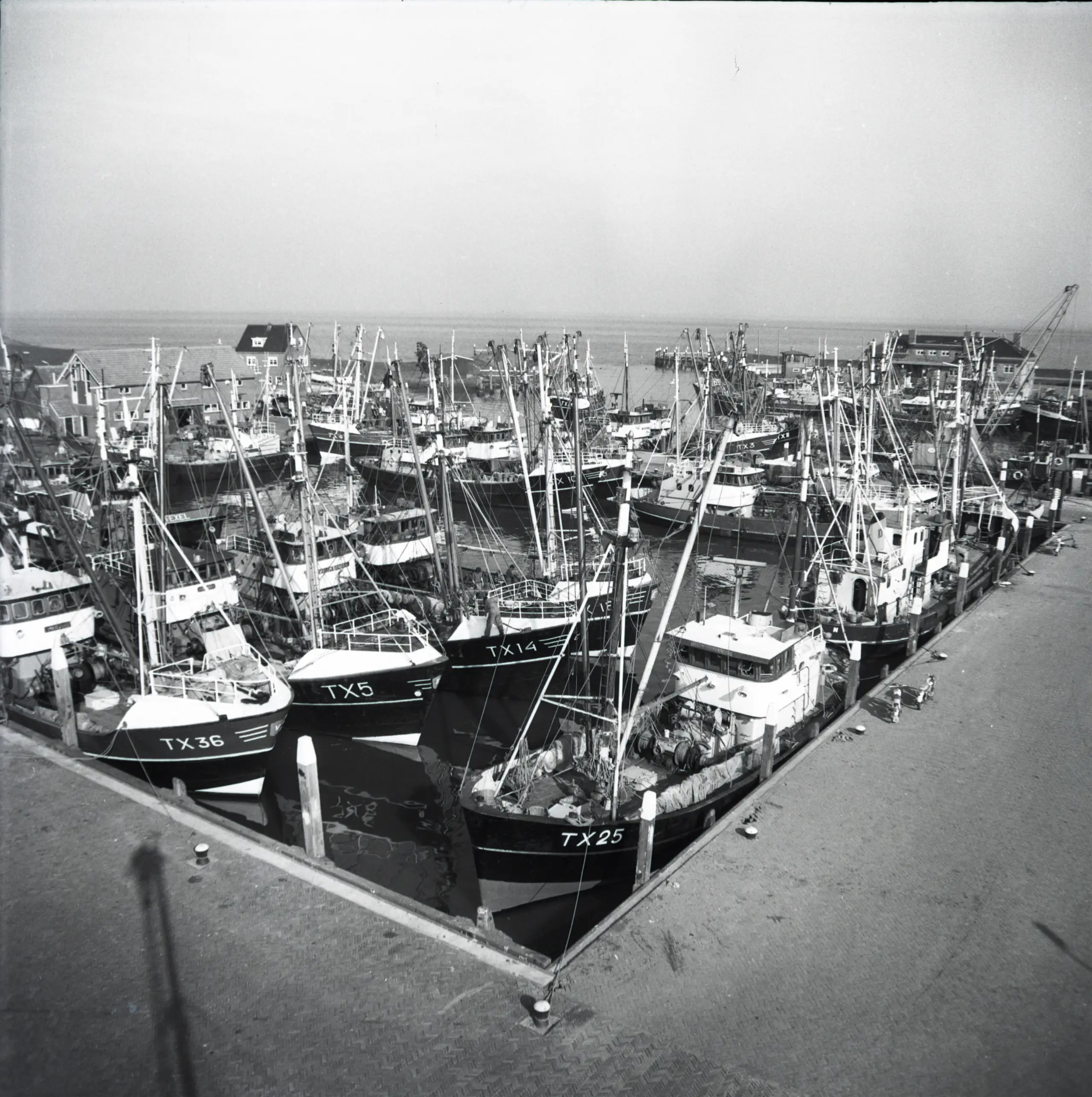
After the war, it is time to rebuild the Netherlands. Demand for fish is high, partly due to a severe protein shortage among the population. Texel fishermen see opportunities and continue to invest. In the 1950s, the number of ships grows steadily. By 1960, the Texel fleet was back to full strength, with 20 cutters and 5 smaller shrimp boats. These new vessels were not only more powerful, but also much more comfortable. With a length of 20 to 25 metres and engines up to 300 hp, they could stay at sea longer and more safely.
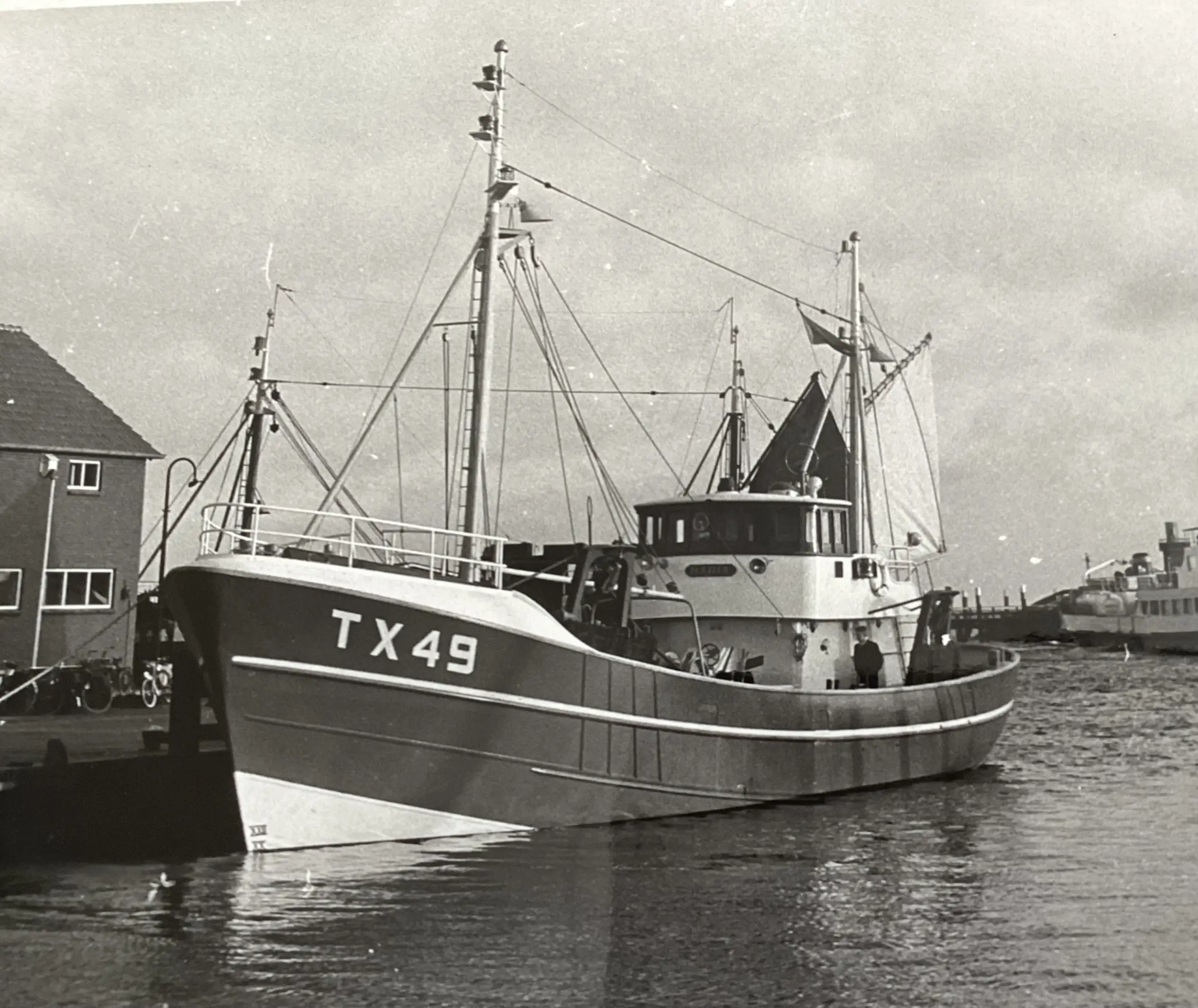
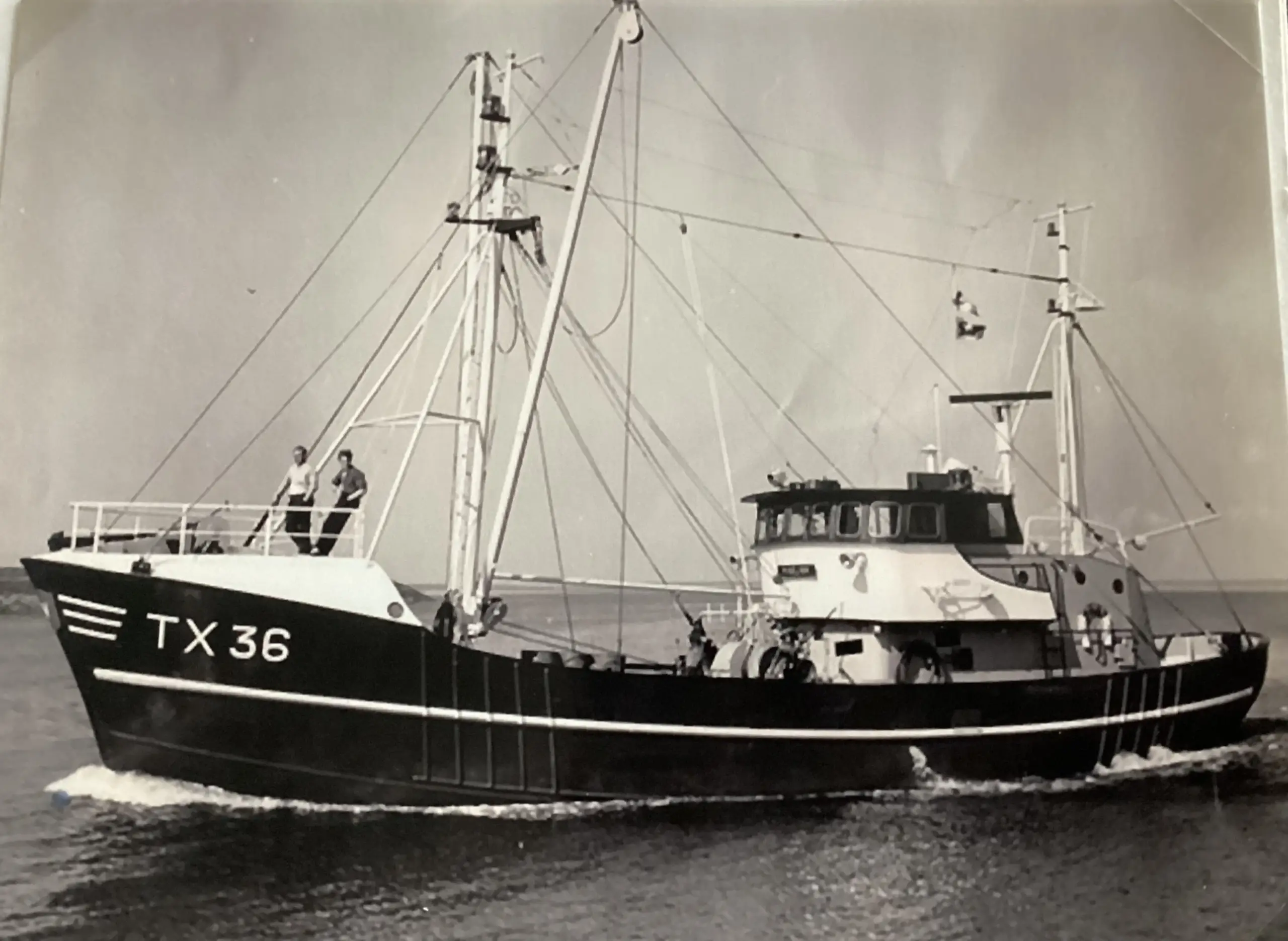
On board, there was now a shower, a toilet, central heating and refrigerated fish holds. For fishermen who were used to wooden ships, this was a world of difference. Thanks to modern navigation equipment, such as radar and Decca, fishing can also be carried out safely in bad weather or fog. Examples are the TX 49 Maria and the TX 36 Marjan. These vessels symbolise a fleet that, after difficult years, is once again preparing for the future.
The period from 1945 to 1970 was a time of reconstruction, growth and renewal. Oudeschild was bustling with activity. The cutters at the quay were larger, stronger and more comfortable than ever.
The beam trawl years (1970–2008)
‘Cutters are getting bigger, engines heavier. A new fishing method conquers Texel.’
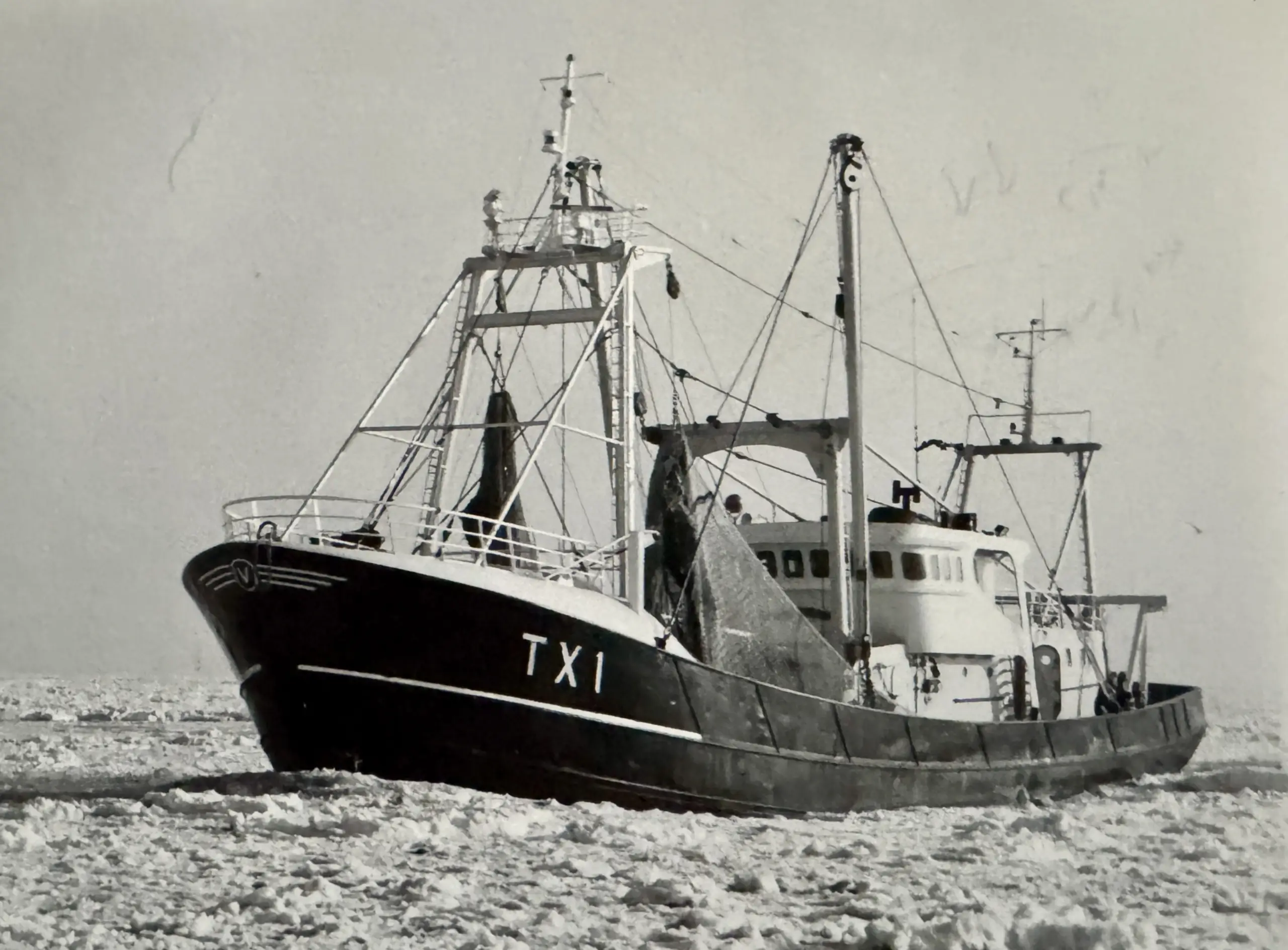
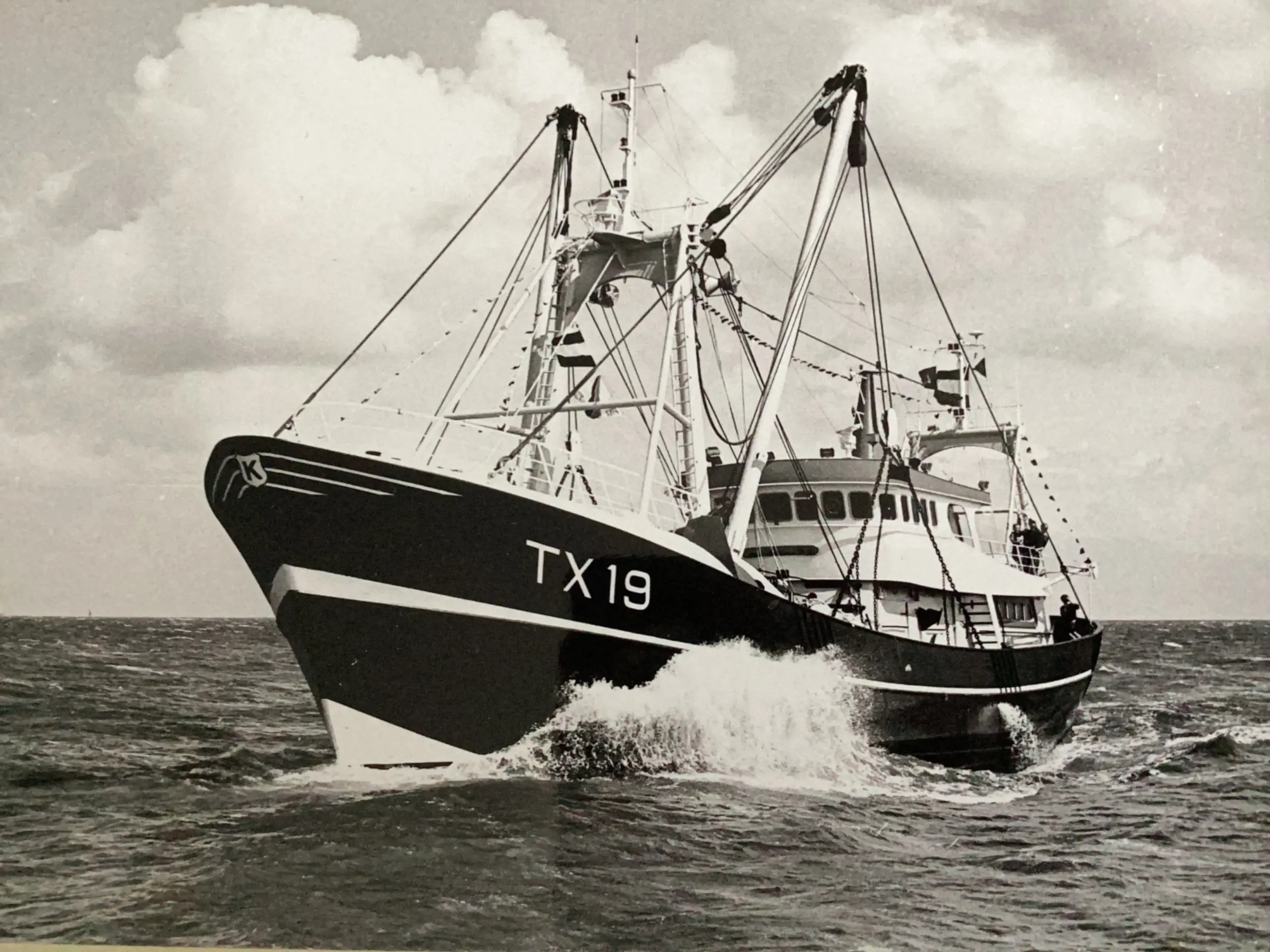
Until 1962, the Texel fleet used beam trawls: a type of trawl net that catches fish in a bag. In that year, the cutters switched to beam trawl fishing. With this technique, steel fishing gear with nets and chains is dragged across the seabed. Sole and plaice are particularly good catches. The beam trawl ensures unprecedented growth. Cutters became longer and more powerful. From 25 metres, they grew to 40 to 45 metres, with engines of over 3000 hp.
The oil crisis of 1973 caused a temporary stagnation. The engines consumed enormous amounts of fuel. When prices returned to acceptable levels, development continued apace. In the early 1980s, the fleet consisted of 30 large beam trawlers and 15 smaller vessels. These were good times for the Texel fishing industry, and many families earned their living in this sector. When oil prices peaked again in 2006-2008, fishing became unprofitable. Many vessels disappeared during the restructuring or were sold. In 2008, Texel had fewer than 20 cutters.
The beam trawler years brought prosperity and growth, but also showed how dependent the fishing industry is on oil prices and regulations.
Pulse and decline (period 2008 - 2026)
‘A revolutionary technique promises salvation, but ends in a ban. The beginning of uncertain times.’
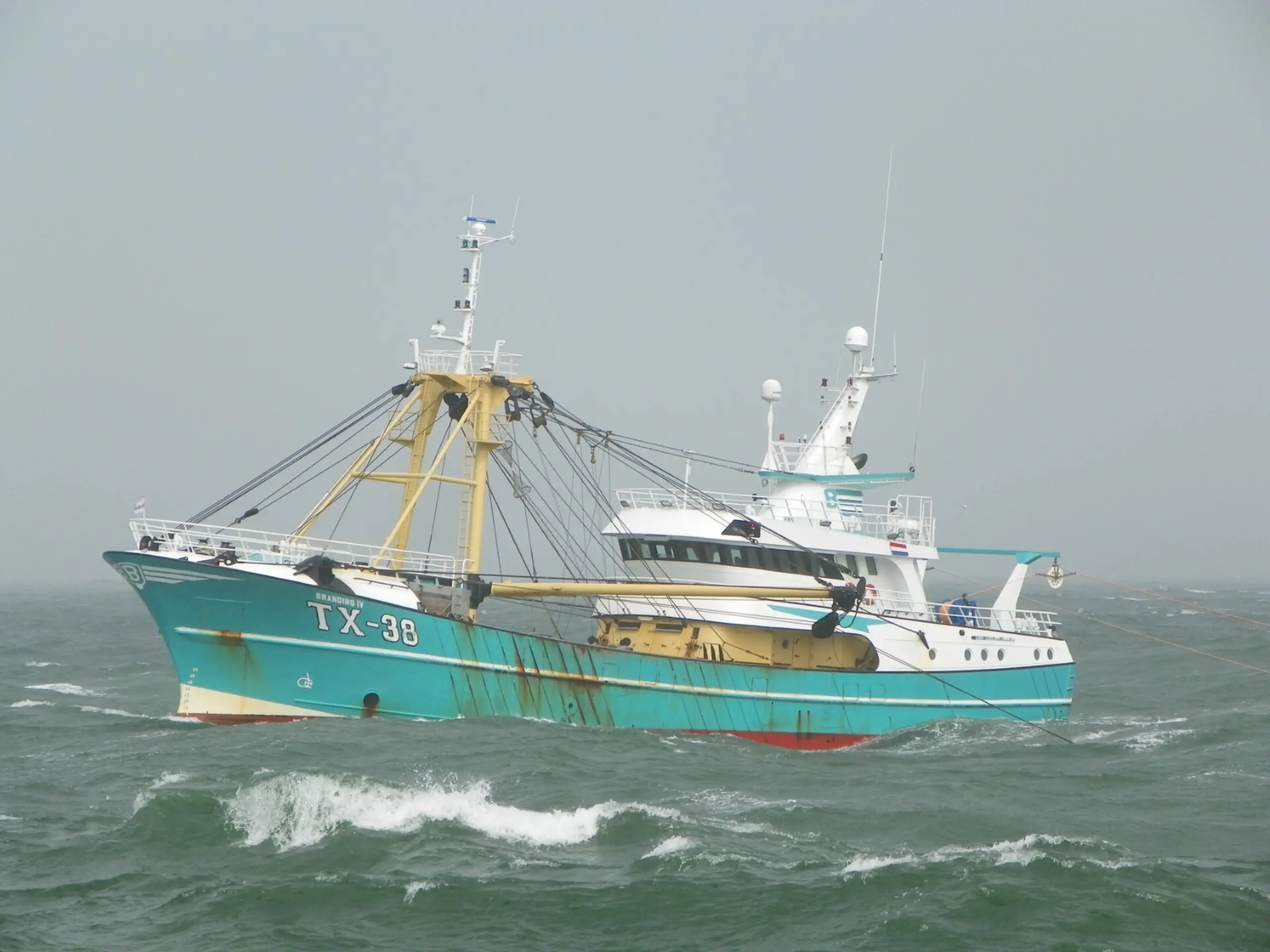
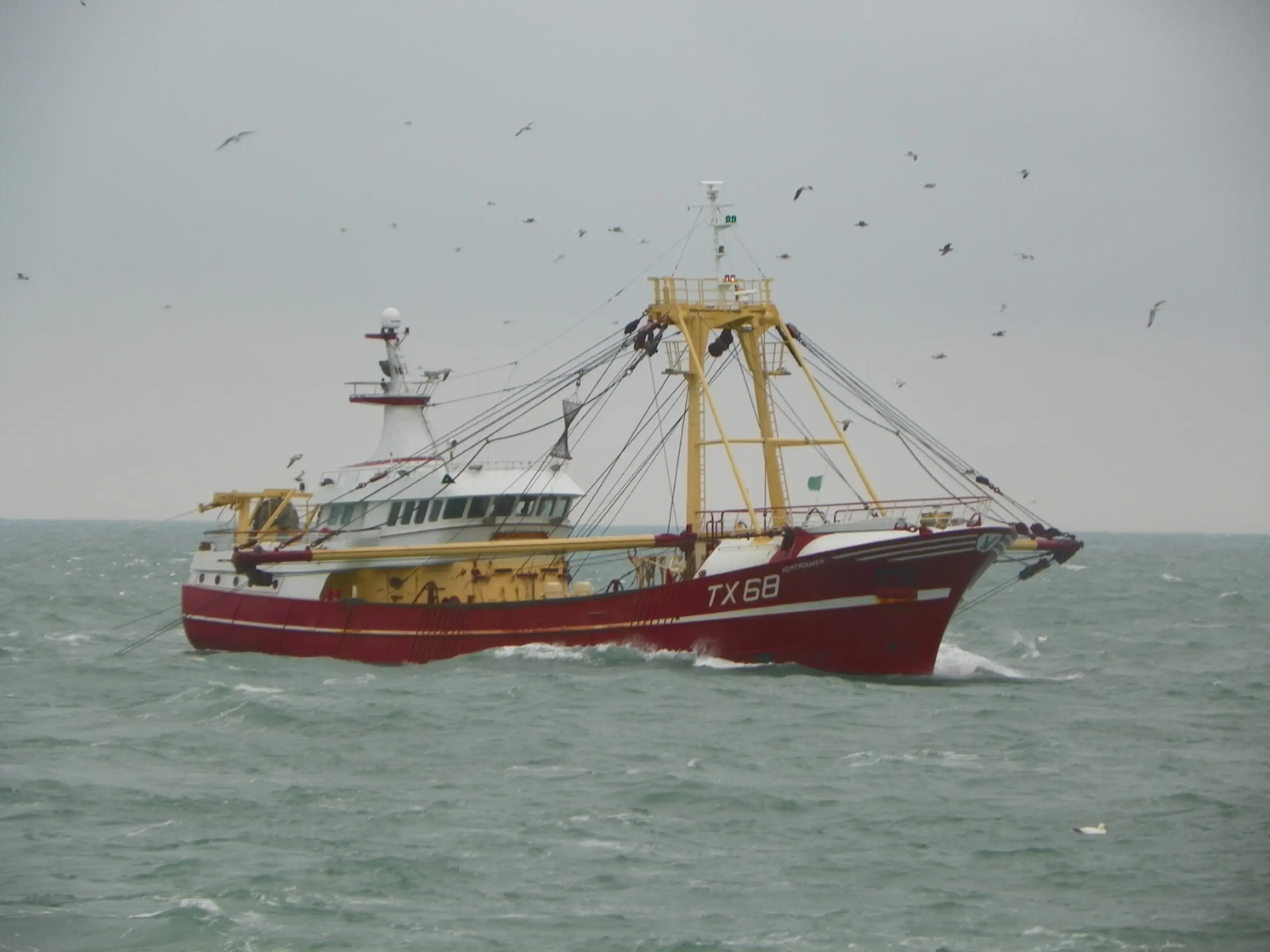
After 2008, fishing with beam trawls becomes almost unaffordable. Fuel prices skyrocket. The Texel fishermen, enterprising and innovative, search for a solution. They find it in the form of pulse fishing. With this method, fish are startled from the seabed with light electric shocks. The cutters no longer need to drag heavy nets. This has many advantages: fuel consumption is reduced by 40 to 50 per cent, the seabed is largely spared and there is less bycatch. Ships such as the TX 68, TX 36 and TX 38 are leading the way.
By 2011, virtually the entire Texel fleet was equipped with pulse fishing gear. It seemed to be the salvation of the sector. However, resistance is growing in France and Great Britain. With the support of nature organisations, a European ban on pulse fishing will be introduced in 2019. From 2021, fishermen will have to return to the old beam trawl, resulting in high costs. But there are more stormy developments, such as wind farms and protected nature reserves at sea. The war in Ukraine causes oil prices to rise again. Many Texel fishermen are closing their businesses or selling their boats.
In 2026, Texel still has three beam trawlers and five shrimp trawlers. A small fleet, but one of great significance. It demonstrates our resilience and connection to the sea.
Where can you view the monuments?
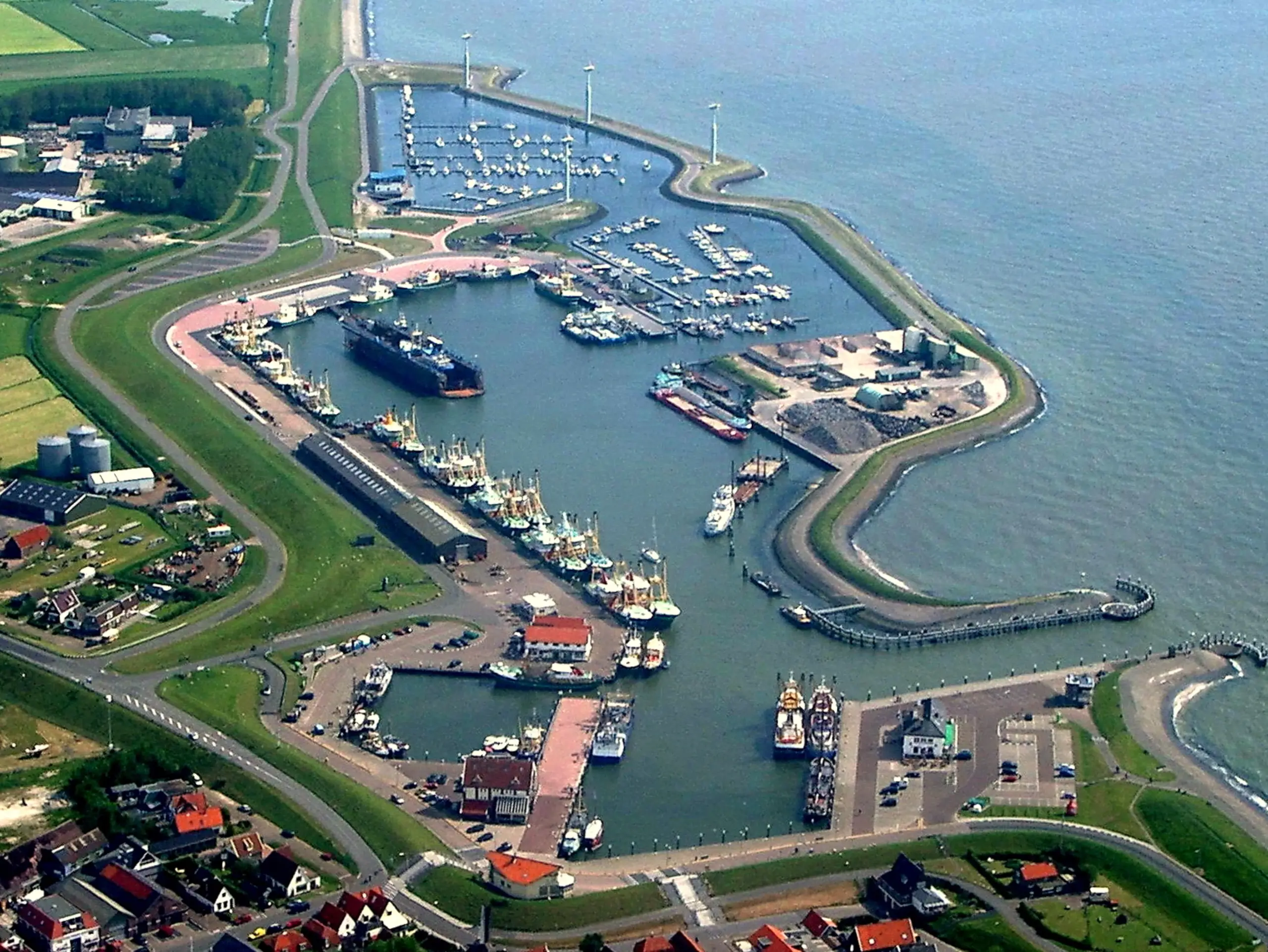
The fishing monuments are located on the dyke near the harbour of Oudeschild, close to the harbour office (click here for Google Maps). Here you will find a section of the TX 3's railing and a replica of the sword mounted as a lectern. There is also a bench (the rear of the TX 29), which was installed in 2023. The monuments are valuable reminders of an era in which fishing played a major role on Texel.
More about the history of Texel


Sign In
Do you want personal tips for your holiday? Then sign up for the newsletter